
Request a Free Gutter Estimate
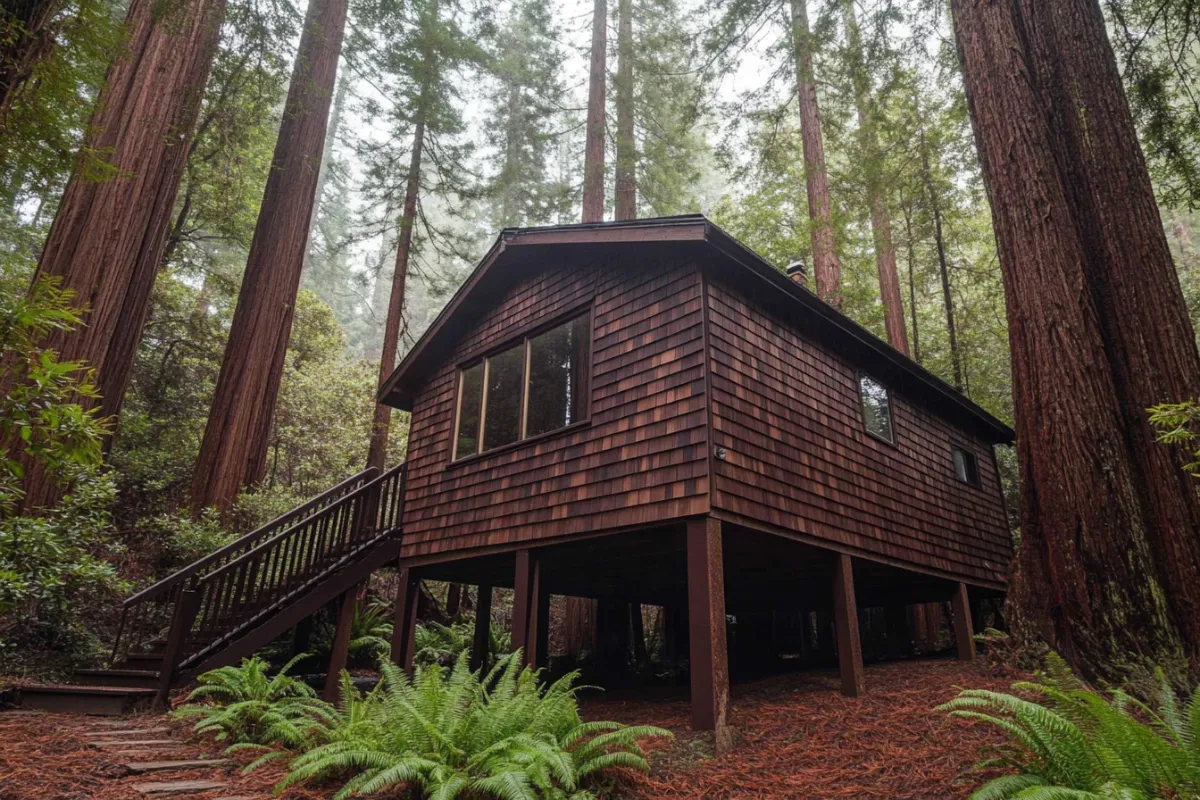
Few towns in Sonoma County get as much rain as Guerneville. It averages about 49 inches annually, and in its wettest year on record it took more than 70. Most of that falls in a few months, often in long storms that last for days. Add the redwoods, which crowd right up against many homes and drop needles into the gutters all year, and you have gutters that earn their keep more than most in the county. Many houses in and around town began as cabins or small resort homes, with steep, simple roofs and gutters added later, often without much thought to size. Others have been raised off the ground since the floods, which means taller walls, longer downspouts and gutters that are harder to reach.
Most of our Guerneville work starts with debris. Fine-mesh gutter guards are close to essential under redwoods, and having a gutter cleaning done ahead of the rains and again in spring keeps needles from packing into the outlets. New seamless gutters sized for the rainfall are part of the work too, along with fixing leaks and sags. Estimates cost nothing, and you'll hear which of these your house actually needs, and which it can skip.
Life Under the Redwoods
Redwood needles are short and fine, and they settle into a gutter like wet sawdust, packing tight around the outlet until water can't get through. On a cabin under tall trees, a gutter can clog in a few weeks during heavy needle drop. That's why we put stainless micro-mesh guards on most homes here, since basic screens and foam let the needles straight through or trap them. Even then, the mesh needs a rinse now and then, since a film of fine debris builds up on top. Shade is the other problem. Roofs under a canopy rarely dry out in winter, so moss and algae grow fast, and fascia boards behind the gutter stay damp for months. We check the wood every time we're up there. Homes closer in toward Sebastopol see lighter needle drop, but in Guerneville, the redwoods set the schedule.
Raised Homes and Long Downspouts
Guerneville's worst flood, in 1986, is still the one people measure against, and many homes near the river have been raised since then. A raised house changes the gutter job. The roof edge sits higher, so downspouts run longer, catch more wind and need more straps to stay attached. Water leaving the downspout has farther to fall, so it splashes harder unless it lands on an extension or a splash block. And on homes built over a crawl space or open framing, water that pools underneath does more damage than on a slab. We plan downspout routes so they stay tight against the house and empty well away from posts and piers. If a long downspout has come loose or crushed at the bottom, one gutter repair trip normally sorts it out the same day. Taller homes also need the right ladders and safety gear, which is part of every job we do here.